Zhao ShaoAng
趙少昂(1905–1998)生於廣州,是當代嶺南畫派的傑出領袖,也是將中國花鳥畫推向現代化的關鍵人物。他繼承了「折衷中外,融會古今」的流派精神,晚年不僅在國際享有「中國花鳥畫第一人」之美譽,更致力於推廣嶺南藝術,弟子遍布全球,其藝術地位被視為連結傳統文人畫與現代寫實美學的重要橋樑。
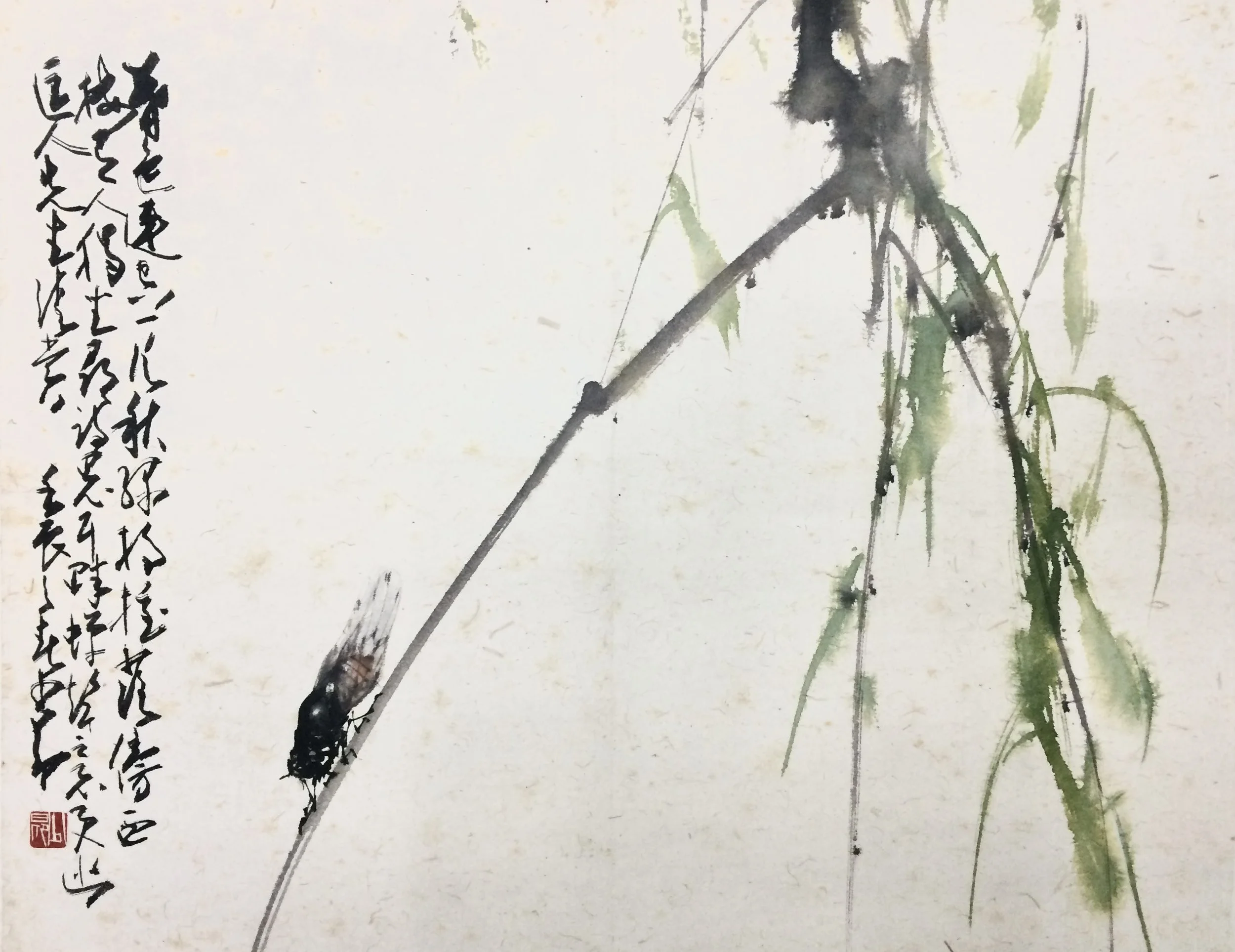
在趙少昂豐富的題材中,「蟬」(常被寓意為「禪」)最為世人稱道,其極致的「蟬翅皴」技法尤為著稱,他利用水分與墨色的精確控制,獨創出透明且具質感、薄如蟬翼的視覺效果。他筆下的蟬體態寫實,腿部關節生動,展現出極強的觀察力。
趙少昂強調「一筆見功力」,往往以大膽簡練的筆觸勾勒蟬所依附的竹幹,常以淡墨一揮而就,與精細刻畫的蟬形成「工寫結合」的對比與形神兼備,畫面充滿節奏感與現代設計感。
受到佛教與老莊思想影響,他筆下的蟬不僅是生物寫生,更是「禪」意與人格的化身。他藉蟬「棲高飲露」的習性,抒發文人清高自賞、不染世俗的氣節,常題詩「飲露聊自潔」以明志,藉此寄託自己不逐名利、一生專注藝術的赤子之心。
明麗的光影與現代美感: 他融合了西方水彩的明亮色調與光影處理,使蟬與背景環境營造出一種清新活潑、富有人文溫度的靈動感。
Zhao ShaoAng (1905–1998), born in Guangzhou, was an outstanding leader of the contemporary Lingnan School of Painting and a pivotal figure in modernizing Chinese flower-and-bird painting. He inherited the school's ethos of “synthesizing Eastern and Western traditions, blending ancient and modern approaches.” In his later years, he not only earned international acclaim as “China's foremost master of flower-and-bird painting” but also dedicated himself to promoting Lingnan art. His disciples spread across the globe, and his artistic stature is regarded as a vital bridge linking traditional literati painting with modern realist aesthetics.
Among Zhao ShaoAng's diverse subjects, the cicada—often symbolizing Zen—is most celebrated. His masterful “cicada-wing texture” technique is particularly renowned, achieved through precise control of water and ink to create a translucent, textured effect as delicate as a cicada's wing. His cicadas possess realistic forms and vividly articulated legs, revealing his keen observational skills.
Zhao ShaoAng emphasized that “a single stroke reveals skill.” He often used bold, concise brushstrokes to outline the bamboo stems where the cicadas cling, frequently executed with a single sweep of light ink. This creates a contrast with the meticulously rendered cicadas, achieving a fusion of meticulousness and freehand brushwork that captures both form and spirit. The composition is filled with rhythm and a modern design sensibility.
Influenced by Buddhist and Daoist philosophy, his cicadas transcend mere biological depiction to become embodiments of Zen spirit and personal virtue. Drawing from the cicada's habit of “dwelling high and drinking dew,” he expresses the literati's noble self-admiration and untainted integrity. He often inscribes poems like “Drinking dew, I purify myself” to declare his resolve, thereby conveying his childlike devotion to art, free from pursuit of fame and fortune.
Vibrant Light and Shadow with Modern Aesthetics: He blends the bright hues and light-and-shadow techniques of Western watercolor, creating a fresh, lively, and humanistic vitality in his cicadas and their surroundings.