Tamura Yoshiyasu
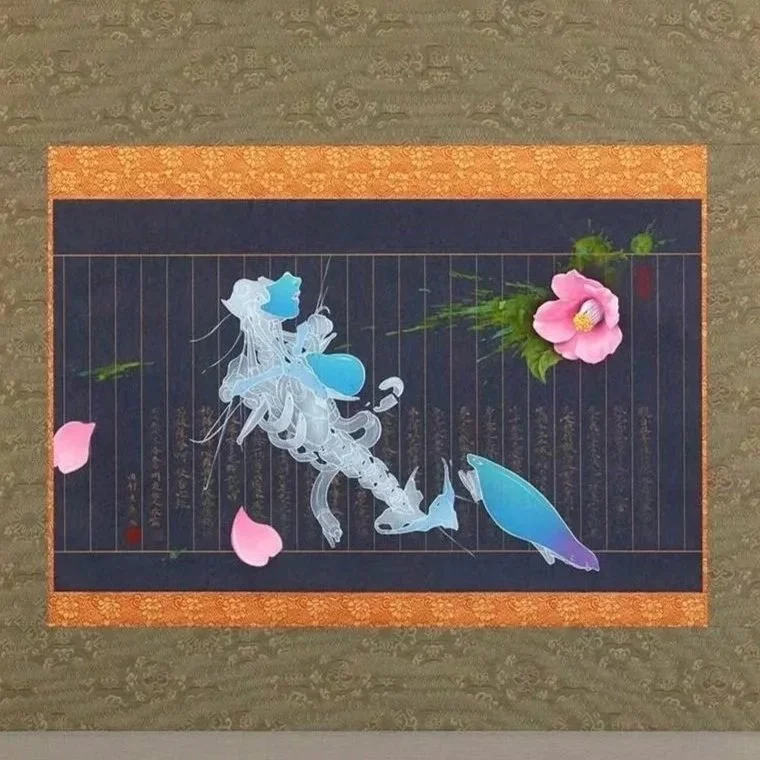
田村吉康(1977–)是當代日本具代表性的「跨界藝術家」之一,成功將日本漫畫(Manga)的視覺語言帶入全球純藝術領域,被譽為當代「琳派」與普普美學的傳人。
田村的藝術生涯始於主流漫畫界。2003年,他在日本頂級漫畫雜誌《週刊少年Jump》發表連載作品《筆神》,展現了深厚的素描功底與對毛筆線條的掌控力。隨後他轉入藝術創作,並獲選為日本文化廳藝術家海外派遣員,旅居墨西哥、佛羅倫斯等地。這段經歷讓他得以將西方的古典宗教畫、壁畫技法,與故鄉的漫畫敘事深度結合。
及後,田村的創作在哲學維度與技術融合上達到了新高度,對生死觀的深層探討。2024 年,田村吉康推出了以《九相圖》為主題的個展,這是他近期最具代表性的轉向。他將佛教描繪屍體腐敗的沉重主題,轉化為細膩華麗的漫畫語彙,探討肉體消亡與精神永恆的對比。在處理沉重主題時,他依然保留了細膩的漫畫線條與鮮艷色彩,形成一種「死亡之美」的視覺張力。
田村吉康不僅是畫家,更是跨越次文化與主流藝術邊界的開拓者,其地位在當代日本藝壇日益舉足輕重。
*「琳派」不僅是一種藝術風格,更是一種將大自然與古典文學(如《源氏物語》)融入日常生活的極致生活美學, 琳派的美學基因至今仍活躍於日本設計與全球藝術中。
現代普普藝術大師村上隆被視為跨越時空的「琳派」傳人,其標誌性的花朵與扁平美學深受琳派影響。琳派的裝飾性特徵曾深深啟發克林姆(Gustav Klimt)與馬蒂斯(Henri Matisse)等藝術家。
Tamura Yoshiyasu (1977–) stands as one of Japan's most representative contemporary “cross-disciplinary artists,” having successfully introduced the visual language of Japanese manga into the global realm of fine art. He is acclaimed as a contemporary heir to the aesthetics of the Rimpa school and Pop Art.
Tamura's artistic career began in the mainstream manga industry. In 2003, he serialized his work Fudegami in Japan's premier manga magazine Weekly Shōnen Jump, showcasing his profound mastery of sketching and control over brushstroke lines. He subsequently transitioned to fine art and was selected as an overseas artist-in-residence by Japan's Agency for Cultural Affairs, living in Mexico, Florence, and other locations. This experience enabled him to deeply integrate Western classical religious painting and mural techniques with the narrative traditions of his native manga.
Later, Tamura's work reached new heights in its fusion of philosophical depth and technical mastery, exploring profound themes of life and death. In 2024, Tamura Yoshiyasu launched a solo exhibition centered on the theme of the Nine Stages of Decay (Kusōzu), marking his most significant recent artistic shift. He transformed the weighty Buddhist subject of corpse decay into a delicate and ornate manga vocabulary, exploring the contrast between physical mortality and spiritual immortality. While addressing weighty subjects, he retains his signature delicate manga lines and vibrant colors, creating a visual tension that embodies a “beauty of death.”
Tamura Yoshiyasu is not merely a painter but a trailblazer bridging subculture and mainstream art, whose stature in contemporary Japanese art continues to grow.
*The “Rinpa” school represents not merely an artistic style but an ultimate life aesthetic that integrates nature and classical literature (such as The Tale of Genji) into daily existence. Its aesthetic DNA remains vibrant in Japanese design and global art today.
Contemporary pop art master Takashi Murakami is regarded as a trans-temporal heir to the Rinpa tradition, his signature floral motifs and flat aesthetic deeply influenced by Rinpa. The decorative qualities of Rinpa profoundly inspired artists like Gustav Klimt and Henri Matisse.