Li XiuShi
李秀實 (1933–)是當代中國油畫界的標誌性人物,曾任中國油畫學會理事。他在藝術史上的重要地位,源於他對油畫「本土化」的深刻探索,特別是他獨創了「墨骨油畫」(Inked-Bone Oil Painting)的藝術語言,將中國傳統藝術的精神靈魂成功植入西方油畫媒介中。
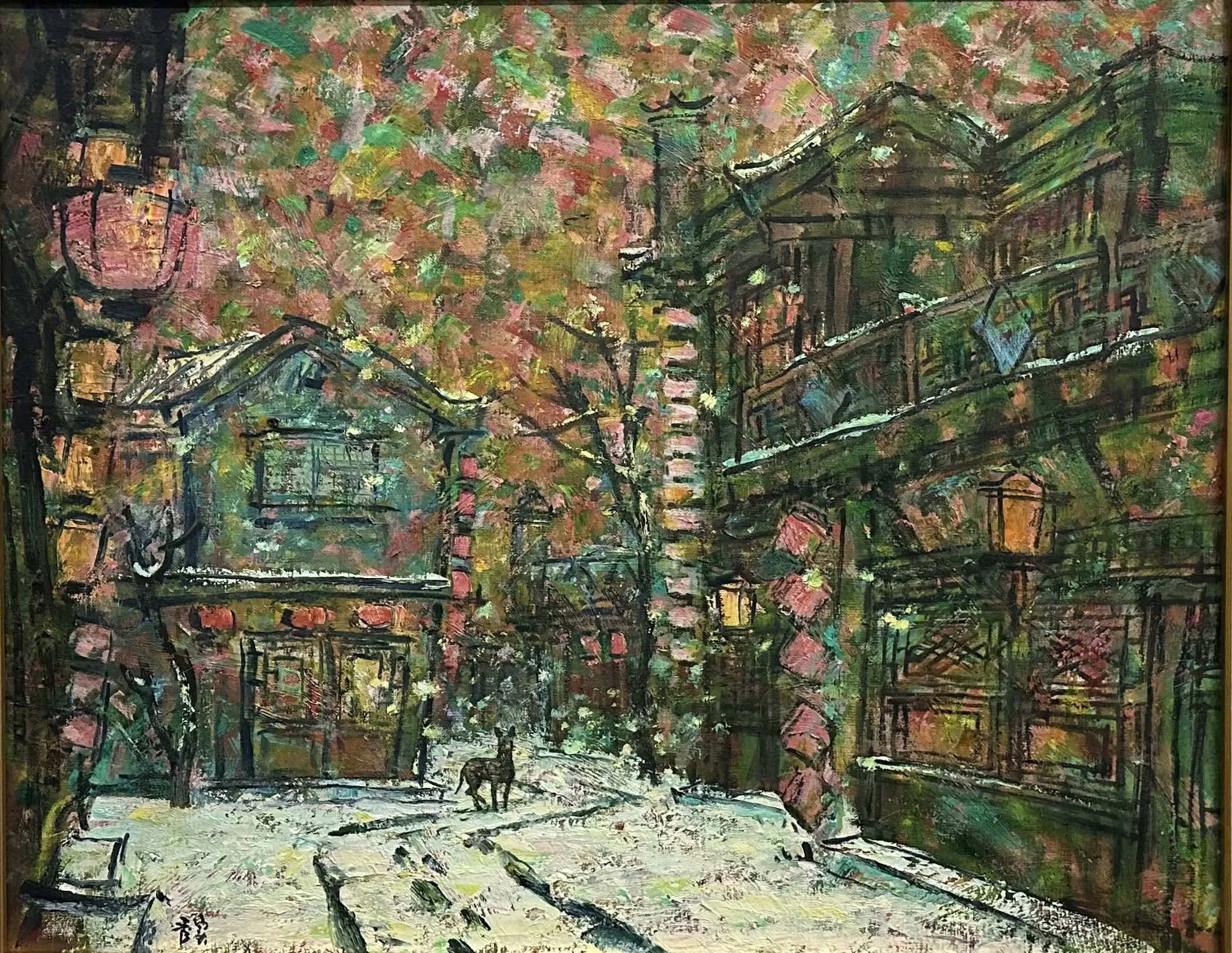
「京華遺韻」系列以 1980 年代完成的《正月》為開篇,是其「墨骨油畫」藝術語言的實踐轉型起點。他捨棄了西方寫實油畫的光影明暗,轉而借用中國畫「六法」中的「骨法用筆」,以線造型,利用勾、勒、皴、擦、點的書寫筆意來建構畫面。
作品結合了西方印象派與現代藝術的鮮艷色彩表現,與東方書法的線條律動形成強烈對比,使畫面具備油畫厚重感的同時,展現出中國文人畫的詩意。
「京華遺韻」系列作品是老北京的情感敘事,以北京的胡同、北海、故宮等名勝為題材(如《北海夏日》、《胡同深深》),並非單純的寫生,而是透過主觀的色彩重組與構圖,捕捉老北京逐漸消逝的氣韻與古都遺韻。
李秀實的作品因其獨特的學術價值,廣受中國美術館等學術機構關注,被譽為中國當代油畫發展進程中的重要研究樣本。
Li XiuShi (1933–) stands as an iconic figure in contemporary Chinese oil painting, having served as a council member of the Chinese Oil Painting Society. His significant standing in art history stems from his profound exploration of the “localization” of oil painting, particularly through his pioneering creation of the “Inked-Bone Oil Painting” artistic language. This innovation successfully infused the spiritual essence of traditional Chinese art into the Western medium of oil painting.
The “Echoes of the Capital” series, beginning with the 1980s work “First Month,” marks the starting point of his artistic transformation toward the “Inked-Bone Oil Painting” language. He abandoned the light and shadow techniques of Western realist oil painting, instead borrowing the “bone method of brushwork” from the “Six Principles” of Chinese painting. He used lines to shape forms, employing the calligraphic brushwork techniques of outlining, tracing, stippling, rubbing, and dotting to construct the image.
The works combine the vivid color expression of Western Impressionism and modern art with the rhythmic lines of Eastern calligraphy, creating a striking contrast. This approach endows the paintings with the weighty texture of oil painting while simultaneously evoking the poetic sensibility of Chinese literati painting.
The “Echoes of Old Beijing” series narrates the emotional legacy of the capital, featuring iconic Beijing landmarks like hutongs, Beihai Park, and the Forbidden City (e.g., Summer at Beihai, Deep Hutongs). These works transcend mere sketching through subjective color recombination and composition, capturing the fading spirit and lingering resonance of the ancient capital.
Li XiuShi's works, recognized for their unique scholarly value, have garnered significant attention from academic institutions like the National Art Museum of China. They are hailed as crucial research specimens in the developmental trajectory of contemporary Chinese oil painting.