Liu JuDe
劉巨德 1946年生於內蒙古烏蘭察布市,清華大學美術學院教授,是當代著名的藝術家及美術理論家。。在當代中國美術界具有崇高的藝術與學術地位。他師從龐薰琹、吳冠中等大師,不僅是中國當代「生命美學」的代表人物,更以其「中西合璧」的純粹性與對民族藝術根源的守護著稱。他被視為將傳統裝飾藝術與現代水墨精神深度融合的集大成者。
2025年夏季,他曾深入河北邯鄲峰峰礦區(磁州窯核心產區)進行為期一個月的采風與創作,並於同年 9 月在「心向天宇——劉巨德藝術作品展」中集中展示了 70 餘件瓷藝作品,其磁州窯瓷藝作品是其近年來藝術探索的巅峰。
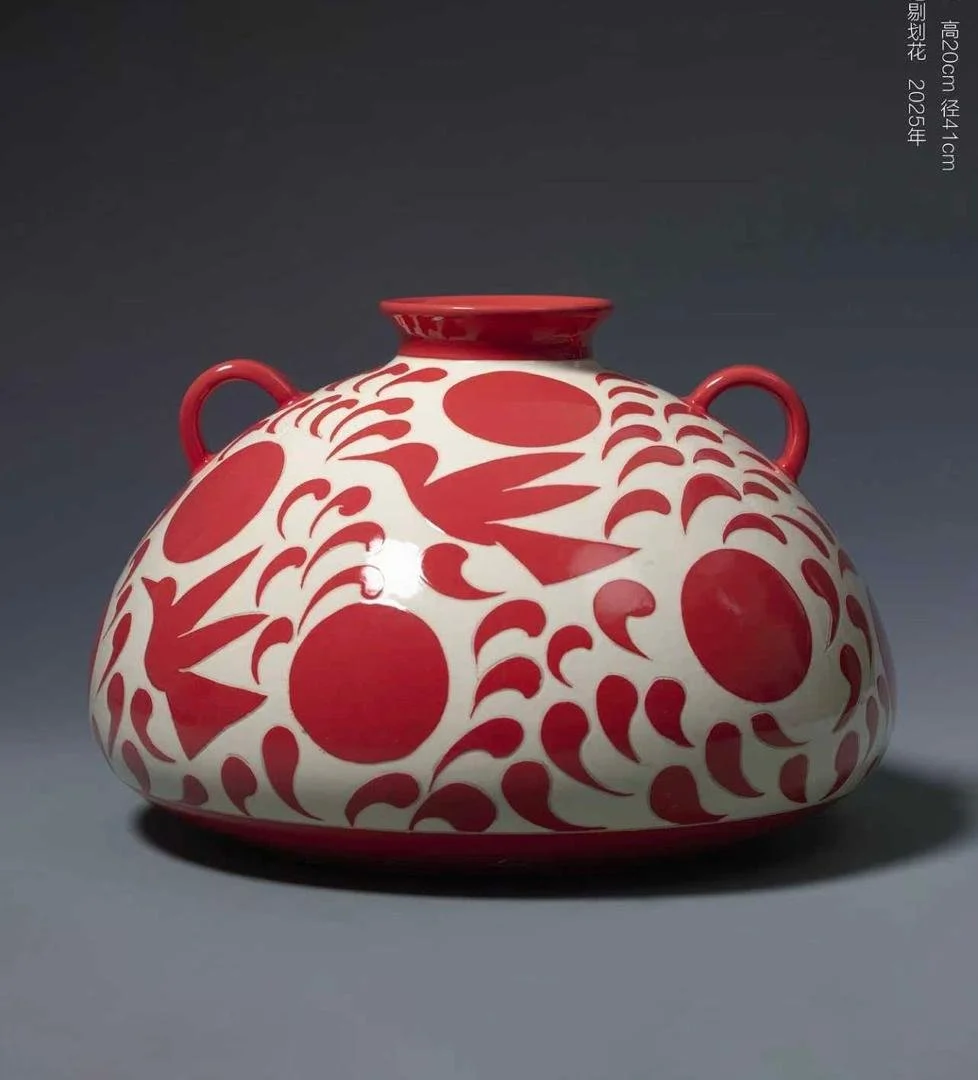
作爲彩墨畫大師,劉巨德將其深厚的水墨功底轉化為陶瓷裝飾語言,充分利用磁州窯傳統的「白地黑花」工藝,將中國畫的墨韻與陶瓷胎體結合。他在瓷器上展現的黑白對比,既保留了民窯的樸拙感,又賦予了現代抽象的點線面構成,被學界譽為一種跨越時空的「黑白神話」的現代演繹。
他的瓷藝創作屏棄了繁複的裝飾,多以鴿子、荷花及故鄉山水為題材。作品強調「物我合一」,利用磁州窯粗獷的胎質表現生命的原始張力與寧靜,體現了一種追求萬物和諧的哲學深度,回歸生命的「混沌美學」。
他將豐富的彩墨經驗轉化為釉下彩繪,利用窯火將毛筆的書寫感凝固,使作品具備了「畫中有瓷,瓷中有畫」的獨特質感,是水墨與火的交織,打破了工藝美術與純藝術的界限。
劉巨德的磁州窯作品不僅是對千年窯火的致敬,更是當代知識分子藝術家對傳統民窯技藝傳承與創新的一次深刻實踐,將傳統文化進行「現代性轉化」的成功典範。
Liu JuDe Born in 1946 in Ulanqab City, Inner Mongolia, Liu JuDe is a professor at the Academy of Arts & Design, Tsinghua University. He is a renowned contemporary artist and art theorist. He holds a revered artistic and academic standing within contemporary Chinese art circles. Trained under masters such as Pang Xunqin and Wu Guanzhong, he is not only a leading figure in China's contemporary “aesthetics of life” but also renowned for the purity of his “East-meets-West” approach and his commitment to preserving the roots of national art. He is regarded as a master synthesizer who deeply integrates traditional decorative art with the spirit of modern ink painting.
In the summer of 2025, he conducted a month-long field study and creative residency in the Fengfeng Mining District of Handan, Hebei (the core production area of Cizhou ware). That September, he showcased over 70 ceramic artworks in the exhibition “Heart Toward the Heavens: Liu JuDe's Artistic Works,” with his Cizhou ware pieces representing the pinnacle of his recent artistic explorations.
As a master of colored ink painting, Liu JuDe transforms his profound ink painting skills into ceramic decorative language. He fully utilizes the traditional “white ground with black decoration” technique of Cizhou ware, merging the ink essence of Chinese painting with the ceramic body. The stark black-and-white contrasts he achieves on porcelain retain the rustic charm of folk kilns while infusing modern abstract compositions of dots, lines, and planes. Scholars hail this as a contemporary interpretation of a timeless “black-and-white myth.”
His ceramic art eschews elaborate ornamentation, often featuring doves, lotus flowers, and landscapes of his homeland. His works emphasize the “unity of self and object,” using the coarse body of Cizhou ware to express life's primal tension and tranquility. This embodies a philosophical depth pursuing harmony among all things, returning to the “chaotic aesthetics” of life.
He transforms his rich experience in ink wash painting into underglaze decoration, using kiln fire to solidify the brushstroke's expressive quality. This creates a unique texture where “painting resides within porcelain, and porcelain within painting”—an interweaving of ink and fire that transcends the boundaries between applied arts and fine art.
Liu JuDe's Cizhou Kiln works pay homage to millennia of kiln traditions while embodying a profound contemporary intellectual artist's practice in inheriting and innovating traditional folk kiln techniques. They stand as a successful paradigm of “modern transformation” within traditional culture.