Huang YongYu
黃永玉(1924–2023)是當代中國藝術界的傳奇人物,被譽為「一代鬼才」及「藝術頑童」。他在木刻、國畫、文學及設計(如首枚生肖郵票「猴票」)等領域皆有卓越成就。他在藝術史上具備極高的地位,不僅因為他打破了傳統國畫的陳規,更在於他將世俗幽默、諷刺藝術與文人風骨高度融合,成為跨世紀的文化符號。
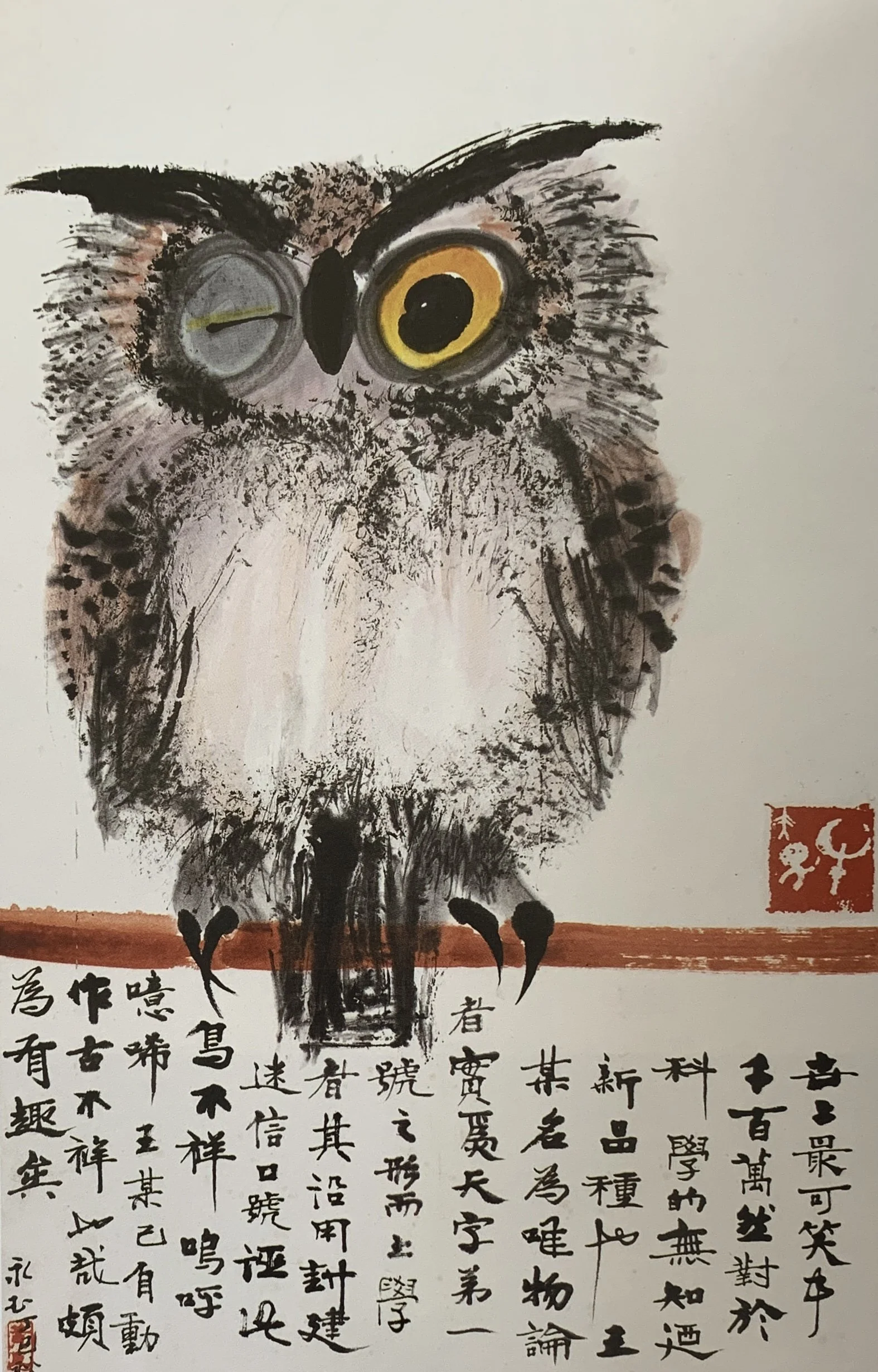
在黃永玉紛呈的創作中,「貓頭鷹」是他最具爭議也最富代表性的標誌,「睜一隻眼閉一隻眼」的處世哲學是他貓頭鷹畫作的核心特點。神情憨態可掬卻帶有幾分狡黠。在特殊年代(1970年代),這種神態曾被曲解為「仇視」,引發著名的「黑畫事件」;但在藝術層面,這象徵了一種超然、靈活且富有洞察力的生活智慧,體現了對複雜世俗的「半醒半夢」。
獨創的「黑白對比」與裝飾色彩: 深受早期木刻經驗影響,他畫貓頭鷹不求傳統的留白,而常以重墨填滿背景,透過「以黑顯白」突出主體。色彩大膽明麗,構圖充滿平面裝飾美與現代感。
幽默機智的「畫配文」: 黃永玉常以詩意或冷笑話為畫作題款。例如:「白天,人們用惡毒的語言詛咒我;夜晚,我為他們工作」,將動物天性轉化為深刻的社會寓言,充滿人文關懷與諷刺趣味。
黃永玉筆下的貓頭鷹已超越了生物寫生,成為一種頑強生命力與自由靈魂的化身。其作品至今仍是國內外各大拍賣行如 Christie's 等爭相收藏的珍品。
Huang YongYu (1924–2023) was a legendary figure in contemporary Chinese art, hailed as a “genius of his generation” and an “artistic prankster.” He achieved remarkable accomplishments across woodcut printing, traditional Chinese painting, literature, and design—including the first zodiac stamp, the “Monkey Stamp.” His immense stature in art history stems not only from his subversion of traditional Chinese painting conventions but also from his masterful fusion of secular humor, satirical artistry, and literati integrity, cementing his status as a trans-century cultural icon.
Among Huang Yongyu's diverse creations, the “owl” stands as his most controversial and iconic symbol. His philosophical approach of “turning a blind eye” forms the core essence of his owl paintings. Their expressions are endearingly innocent yet tinged with cunning. During the tumultuous 1970s, this demeanor was misinterpreted as “hostility,” sparking the infamous “Black Paintings Incident.” Artistically, however, it symbolizes a detached, flexible, and insightful wisdom—a “half-awake, half-asleep” perspective on complex worldly affairs.
Unique “black-and-white contrast” and decorative color: Deeply influenced by his early woodcut experience, he eschews traditional negative space in owl paintings, often filling backgrounds with dense ink to highlight subjects through “black revealing white.” Colors are bold and vibrant, compositions brimming with flat decorative beauty and modernity.
Witty and Humorous “Painting-Accompanying Texts”: Huang Yongyu often inscribed his works with poetic verses or dry humor. For instance, “By day, people curse me with venomous words; by night, I work for them” transforms animal nature into profound social allegories, brimming with humanistic concern and satirical wit.
Huang Yongyu's owls transcend mere biological depiction, becoming embodiments of tenacious vitality and free spirits. His works remain coveted treasures sought by major auction houses worldwide, including Christie's.