Fu Lei
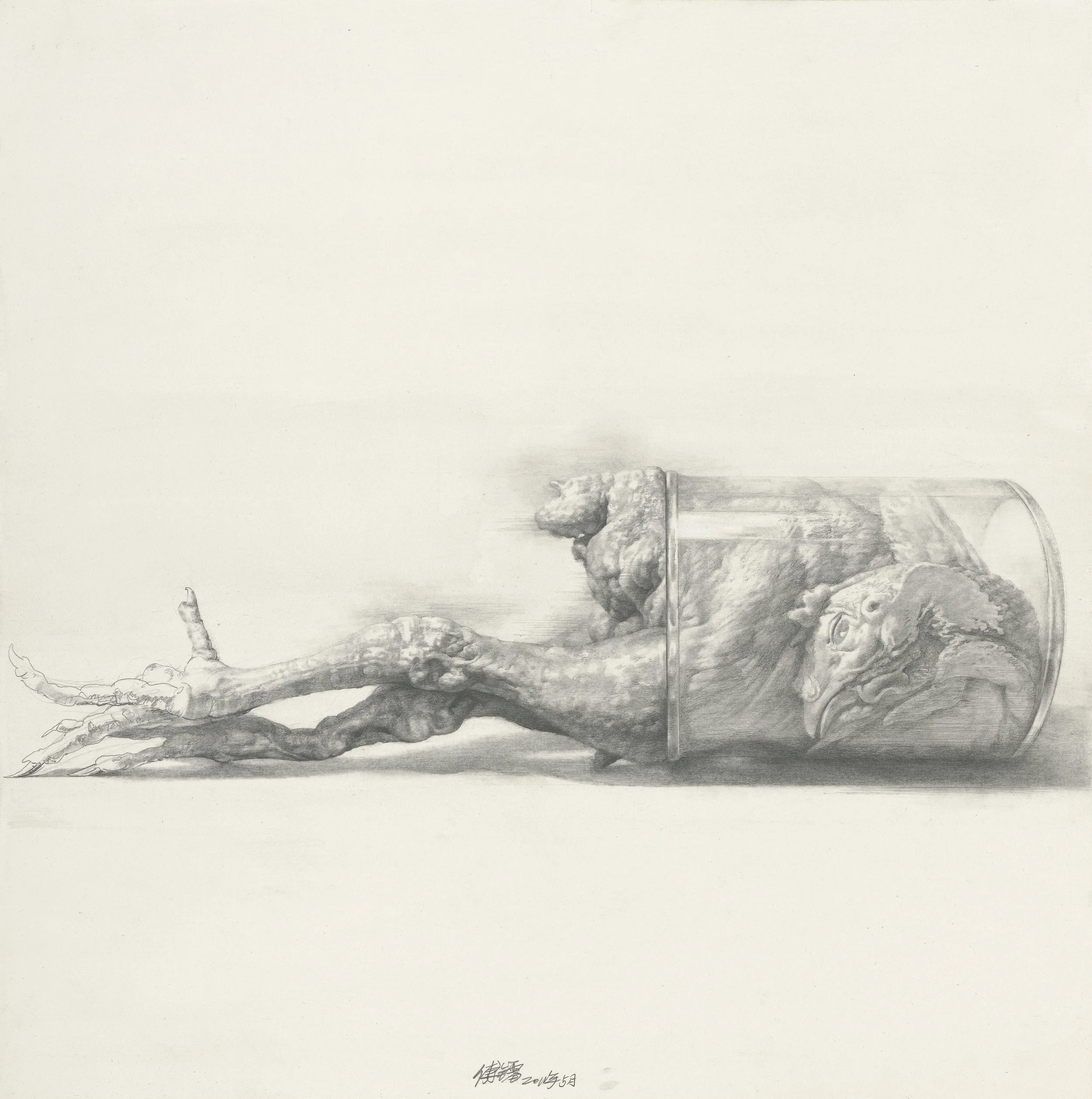
傅鐳 1958 年生於北京,畢業於河北師範大學美術系油畫專業,是中國當代藝術家中長期以素描作為核心創作語言的重要代表。其創作立基於嚴謹的學院訓練,同時將素描由再現性的造型工具,轉化為承載觀念思考與精神指向的獨立繪畫系統。
傅鐳主要以鉛筆、炭筆等單色媒材創作,透過線條、結構與灰階層次的精密組織,建構出具有高度時間性與思辨性的畫面空間。反覆描繪、擦拭與留痕的工作方式,使畫面成為一種「過程的呈現」,素描在此不僅指向可見之物,更指向觀看行為本身與藝術家對現實經驗的觀念性回應。
其人物與觀念性題材多呈現內省、凝視式的狀態,形象往往處於未被敘事完全界定的臨界位置,暗示個體存在、感知與精神狀態的開放性。這種對「未完成性」與「不確定性」的保留,使其素描具有明確的當代思想屬性。
油畫專業背景所帶來的結構意識與整體觀,使傅鐳得以以繪畫性思維處理素描的體量、節奏與空間關係。其以節制、重複與長時間勞作回應當代影像文化的速度與消耗,使作品在學術論述與收藏市場中,建立起兼具觀念深度與長線價值的穩定位置。
Fu Lei, born in Beijing in 1958, graduated from the Oil Painting Department of Hebei Normal University's School of Fine Arts. He stands as a significant representative among contemporary Chinese artists who have long employed drawing as their core creative language. His practice is grounded in rigorous academic training, yet he transforms drawing from a representational tool into an independent pictorial system that carries conceptual thought and spiritual direction.
Fu Lei primarily works in monochromatic media such as pencil and charcoal. Through the meticulous organization of lines, structure, and tonal gradations, he constructs pictorial spaces imbued with a heightened sense of temporality and speculative inquiry. His working method—involving repeated drawing, erasing, and leaving traces—transforms the image into a “presentation of process.” Here, drawing points not only to visible objects but also to the act of viewing itself and the artist's conceptual response to lived experience.
His figures and conceptual subjects often appear introspective and contemplative, positioned at the threshold where narrative definition remains incomplete. This suggests the openness of individual existence, perception, and mental states. By preserving this “unfinished” and “uncertain” quality, his drawings acquire distinct contemporary intellectual attributes.
Fu Lei's background in oil painting cultivates a structural awareness and holistic perspective, enabling her to approach the volume, rhythm, and spatial relationships of drawing with a painterly mindset. Through restraint, repetition, and prolonged labor, she counters the speed and consumption of contemporary visual culture. This approach has established her work in both academic discourse and the collecting market, securing a stable position that combines conceptual depth with long-term value.